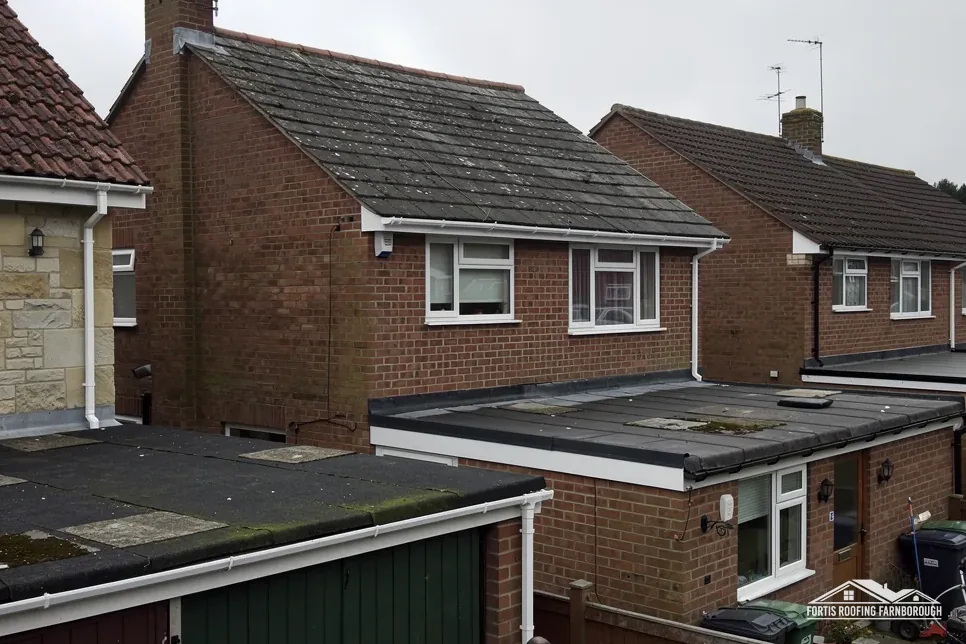
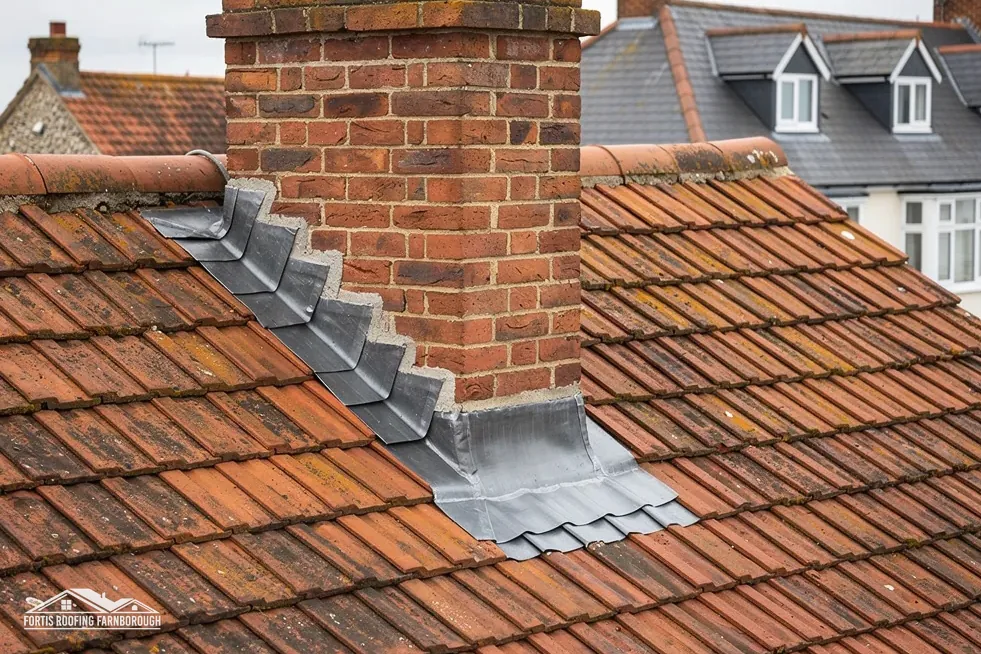
Red brick cottages
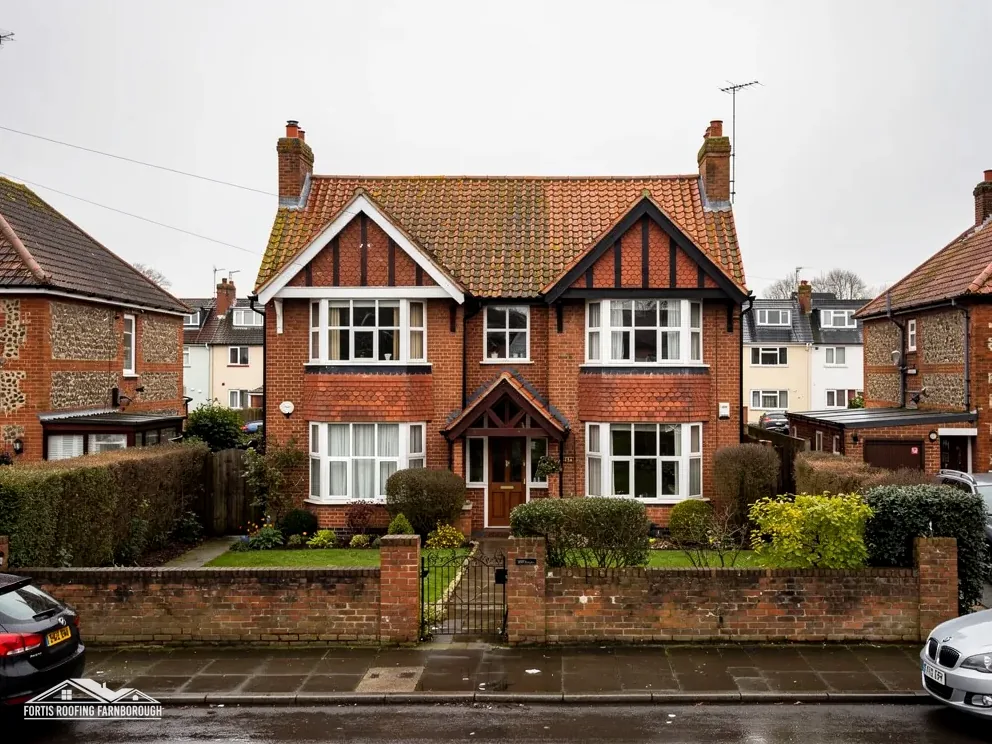
In 1923 the Victoria County History described the usual type of red brick cottages, with a few of half-timber work.
Roofs from 1923 brick cottages to the Finchwood Park homes
Finchampstead stood apart on its heath until the 1800s and now takes new homes at Finchwood Park. We survey brick cottages and newer roofs, then give you one written price.
In 1923 the Victoria County History described the usual type of red brick cottages, with a few of half-timber work.

The church tower was added in 1720 in English bond brickwork, replacing an earlier tower that was probably wooden.

Hogwood Farm, within Finchampstead parish, has permission for up to 1,500 new houses and is marketed as Finchwood Park.
Map of Finchampstead with Eversley, Yateley, Arborfield Green, Crowthorne marked around it.
Map data © OpenStreetMap contributors. Loads only when you ask for it.
Eversley lies to the south-west, Yateley to the south-east, Arborfield Green and Arborfield to the north-west, Barkham to the north, and Crowthorne to the east.
About 8 road miles north-west of Farnborough · Wokingham Borough Council (unitary).
Finchampstead, from heath to Finchwood
Which council does what on a Finchampstead roof job, how the village moved from remote heath to new housing, and how its conservation area and listed entries shape a repair, with a published source for every number.
| No. | Chapter | The figure it turns on |
|---|---|---|
| 01 | One unitary council behind a Finchampstead roof | Wokingham plans, licenses and shares building control |
| 02 | From inaccessible village to Finchwood Park | 12,750 residents, ONS Census 2021 |
| 03 | Finchampstead Church area and its listed buildings | 5 listed buildings within 500 m |
Chapter 01 of 03
| Role | Body for Finchampstead addresses |
|---|---|
| Planning authority | Wokingham Borough Council (unitary) |
| Highway authority | Wokingham Borough Council |
| Building control | Building Control Solutions (BCS), with West Berkshire |
| Scaffold licence on the highway | Wokingham Borough Council; scaffold firm applies |
Finchampstead sits in the unitary borough of Wokingham, 8 road miles from Farnborough on our count from the A325 Farnborough Road, heading north-west. One council decides planning, runs the roads and pavements, and licenses scaffold on them, so a Finchampstead roof job has a single council behind both its planning side and its highway side.
Building Control Solutions, known as BCS, is Wokingham's local authority building control service, run jointly with West Berkshire. The national test applies here. The Planning Portal's guide sets the line at less than 25 per cent of the building envelope and less than 50 per cent of the roof, and a few replaced tiles sit well inside both. Work that goes beyond them, such as a complete roof replacement, brings in BCS or a registered building control approver.
The survey tells you which side you are on. We measure the slope, count what is affected and photograph it, so the figure building control asks about first is already in your hands before an application is discussed.
A change of covering brings its own question. Should the new material make the covering 15 per cent or more heavier, Building Regulations approval is needed, with a structural check recommended by the Planning Portal. Brick cottages with old rafters are the sort of house where that check earns its place, and the survey records the existing covering so the comparison can be made. Where a lighter covering is proposed, the same record shows what the roof carries now and what it would carry after.
Wokingham Borough Council leaves the licence application to the scaffold firm, which files it in its customers' names, so you have no form to complete. The licence costs £263 for the first 4 weeks and £163 for each 4 week period after that, and the council wants a minimum of 10 working days' notice before the proposed start. Its page also refers to a footway at least 1.2 metres wide, which is one reason the scaffold position is worked out in advance. Private roads need no scaffold licence. We talk the layout through with the scaffolders on survey day, so the access suits the roof and the street. The plan also covers where skips, ladders and materials are kept, so that neighbours can see how the street will be used.
Chapter 02 of 03
Four figures behind Finchampstead's roofs
The 1923 Victoria County History describes Finchampstead as having the usual type of red brick cottages, with a few of half-timber work. The same account explains why the village stayed quiet. Before the inclosure of Windsor Forest in 1818 it was very inaccessible, and no bridge crossed the Blackwater until Eversley Bridge was built in 1819. John Walter built the road across the Ridges in 1861 to 1863 and planted it with Wellingtonias. The 2021 Census counted 12,750 usual residents in the parish.
Red brick cottages of that age have usually seen their roofs re-covered, and half-timbered walls move a little as they age, so the junction between roof and wall deserves a close look. We lift tiles at the eaves and at the verge, where the roof meets the gable end, photograph what is underneath, and judge whether the battens, the thin strips the tiles hang from, are sound. A repair that keeps the old roof shape and covering costs less than starting again, and where the evidence points that way our report says it plainly.
The village sits on undulating ground that rises to the Finchampstead Ridges, among heath and pine woods. Where trees stand close, needles and leaf litter gather in gutters and valleys, and a blocked outlet lets water spill over the eaves and run down the walls. Clearing them is a small job when done regularly, and the survey notes which gutters and valleys sit under trees.
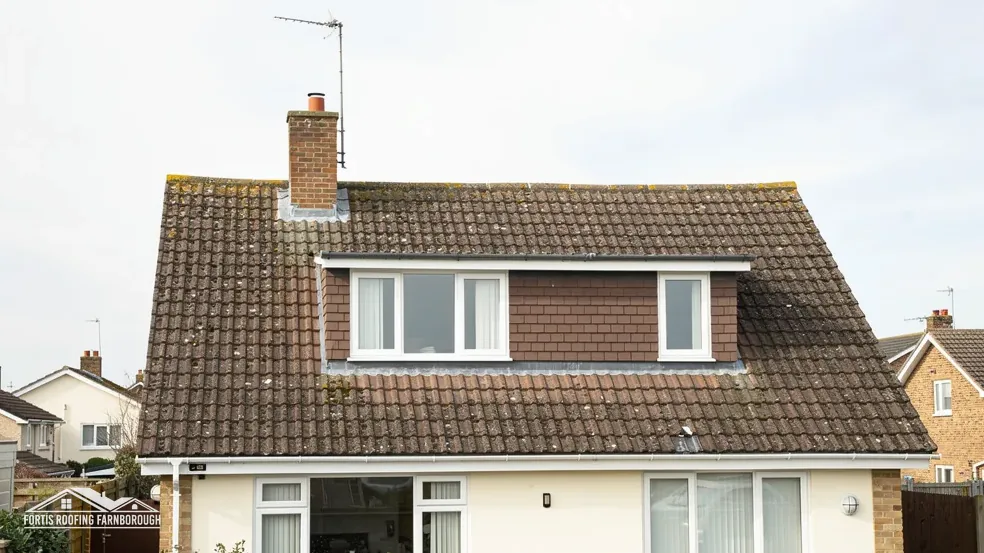
Part of the former Arborfield Garrison development falls within Finchampstead parish. Wokingham Borough Council records that the Hogwood Farm part has permission for up to 1,500 new houses and is being marketed as Finchwood Park. A newer house raises different questions from a cottage of 1923: how the ridge and verge are fixed, whether the junctions are sealed, and how the gutters are supported. Our gutters, soffits and fascias page explains how those parts are surveyed.
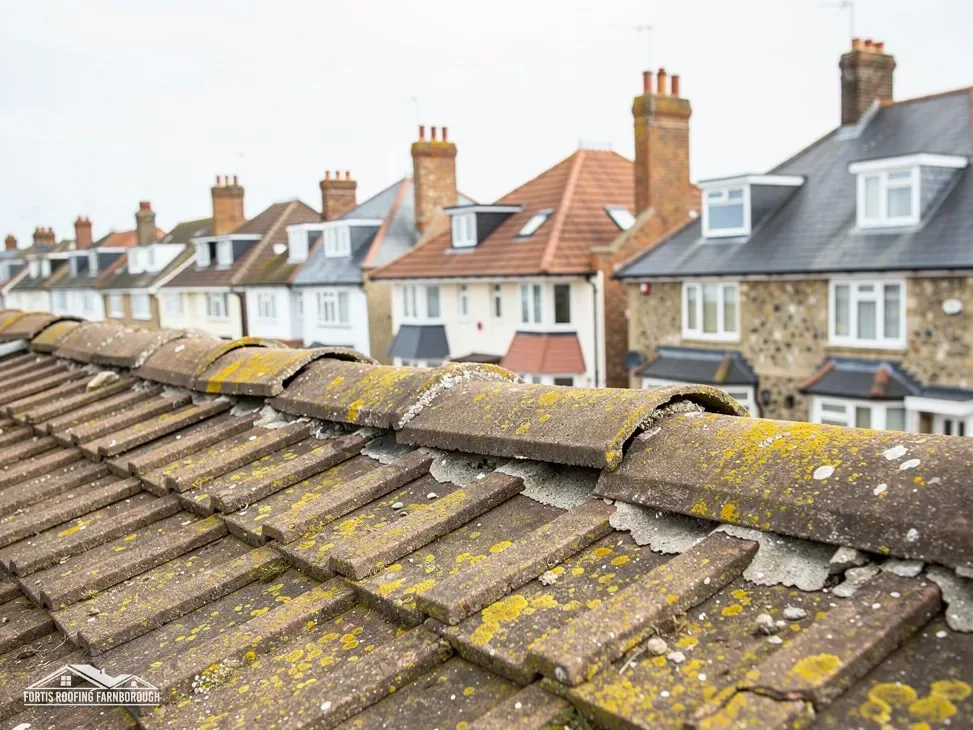
The same slope-by-slope record serves both ends of the village. Whatever the age of the house, you see the photos and measurements of your own roof, and any repair is argued from them.
Chapter 03 of 03
| Designation | In Finchampstead | For roof work |
|---|---|---|
| Conservation area | Finchampstead Church | Ask Wokingham before changing a roof's look |
| Grade II listed | The Thatched Cottage (NHLE 1313097) | Listed building consent for work affecting character |
| Grade II listed | The Verge (NHLE 1135803) | Listed building consent for work affecting character |
| Grade II listed | Finchampstead Baptist Church (NHLE 1118096) | Route depends on denomination and use |
| Grade II listed | Finchampstead War Memorial (NHLE 1438060) | Listed building consent for work affecting character |
Wokingham lists a Finchampstead Church conservation area among its 16. A leaflet on the area, hosted by Finchampstead Parish Council, records that the tower of St James' Church was added in 1720 in English bond brickwork, replacing an earlier tower that was probably wooden, while the chancel and nave date from the 12th century. The National Heritage List places five listed entries within 500 m of the point we take as the village centre. Two are homes, The Thatched Cottage and The Verge, both Grade II and numbered 1313097 and 1135803, and on either of them listed building consent has to be in place before any work that would alter what makes it special. St James' stands within the conservation area, and the leaflet is the record to read before work that changes the look of anything near it.
Living in a conservation area does not freeze a roof. A repair that restores what was there, with the same covering and the same ridge, leaves the look of the building as it was. A new material, a different ridge or a moved chimney changes the look, so those go to Wokingham's planning team before pricing. We also check with Wokingham whether an Article 4 direction covers your street.

If a change does need the council's opinion, we send Wokingham the photographs and measurements of your roof together with a plain description of the work, wait for the reply, and hold the booking until the route is settled, so no roof is left open to the weather while a question is pending.
Listed building consent covers work that affects a listed building's character. For a place of worship the ecclesiastical exemption can replace it, but only for the denominations the exemption covers. Finchampstead Baptist Church is listed Grade II. The right route turns on which body the building belongs to and how it is used today, so that is settled with the congregation and the council before a roofer is asked to price anything. The war memorial was listed Grade II in September 2016.
Where a house or cottage is listed, the right fix is the one that keeps the old fabric: lead work renewed in the correct code at flashings and valleys, battens and tiles matched, ridges refixed. We record the original details first, so any change can be shown to be like for like.
Usually that is the first thing we test. We lift tiles at the eaves and verge, photograph the battens and the wall junctions, and judge whether the covering still has life. If it has, a repair keeps the old roof shape and costs less than a new roof. If it has not, the photos show why, and the written price follows from them.
Not for a repair that restores the old covering, ridge and chimney as they were. A new material or a changed ridge alters the look, and then we put it to Wokingham's planning team before pricing. Whether an Article 4 direction applies to your address is checked with the council, by address, before we agree a price with you.
Patch repairs sit inside the Planning Portal's test of less than 25 per cent of the building envelope and less than 50 per cent of the roof. A complete re-roof lies beyond it, and then Building Control Solutions or a registered approver is involved. We tell you at the survey which route applies and put it in writing.
Scaffold on a Wokingham road or pavement is licensed by Wokingham Borough Council, which expects the scaffolding firm to make the application; the firm files it for you. The council wants at least 10 working days' notice, while private roads need no scaffold licence. We work out the layout with the scaffolders on survey day, and the dates are in the plan you receive.
Get your free roof quote
Send us your street and anything odd about the roof, and we will photograph each slope.
10-year workmanship guarantee, in writing.