Steep handmade tile roofs
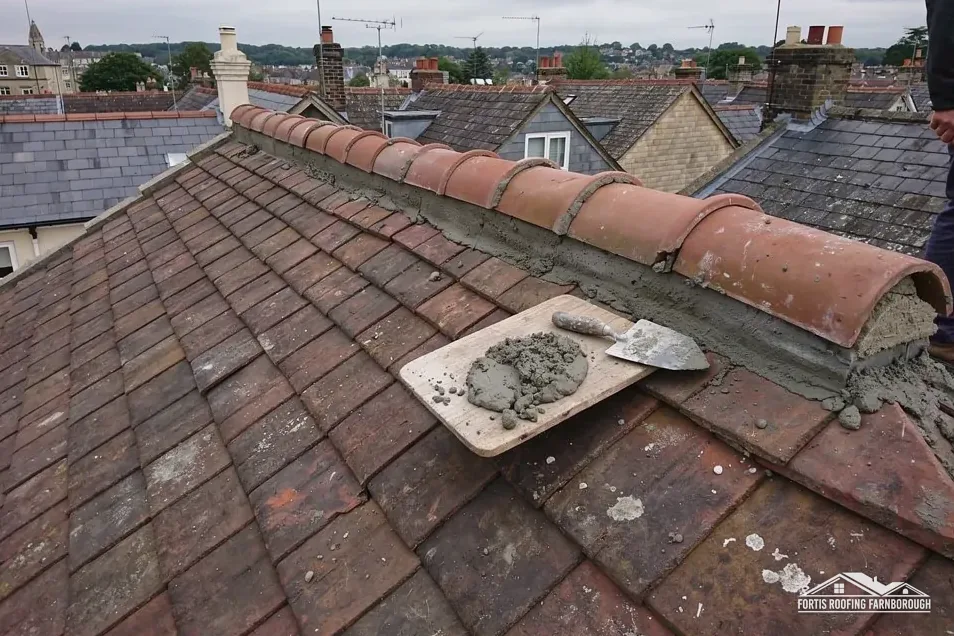
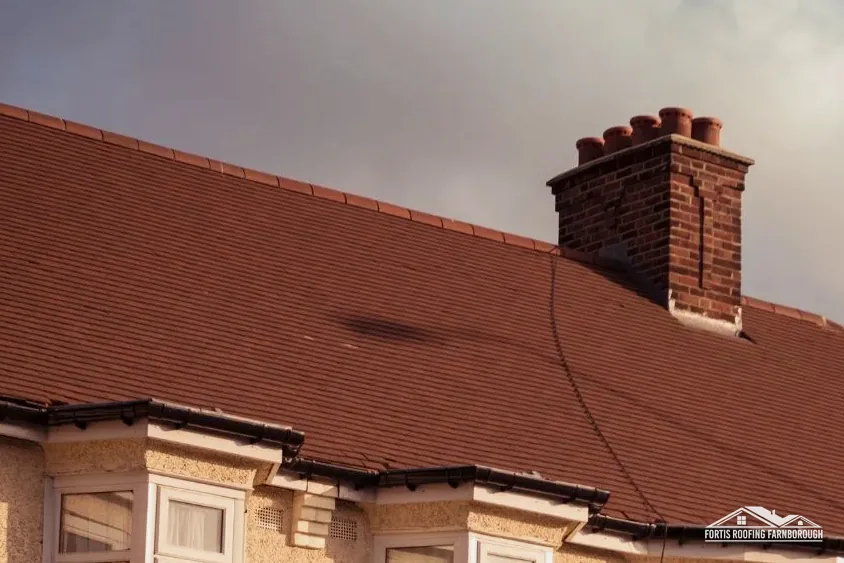
East Hampshire's appraisal singles out steeply pitched handmade tile roofs, with their characteristic undulation.

Roofs under tile-hung gables on the Farnham to Alton road
Bentley sits on the A31 between Farnham and Alton, and its conservation area appraisal singles out steeply pitched handmade tile roofs. We survey them with matching in mind.
East Hampshire's appraisal singles out steeply pitched handmade tile roofs, with their characteristic undulation.
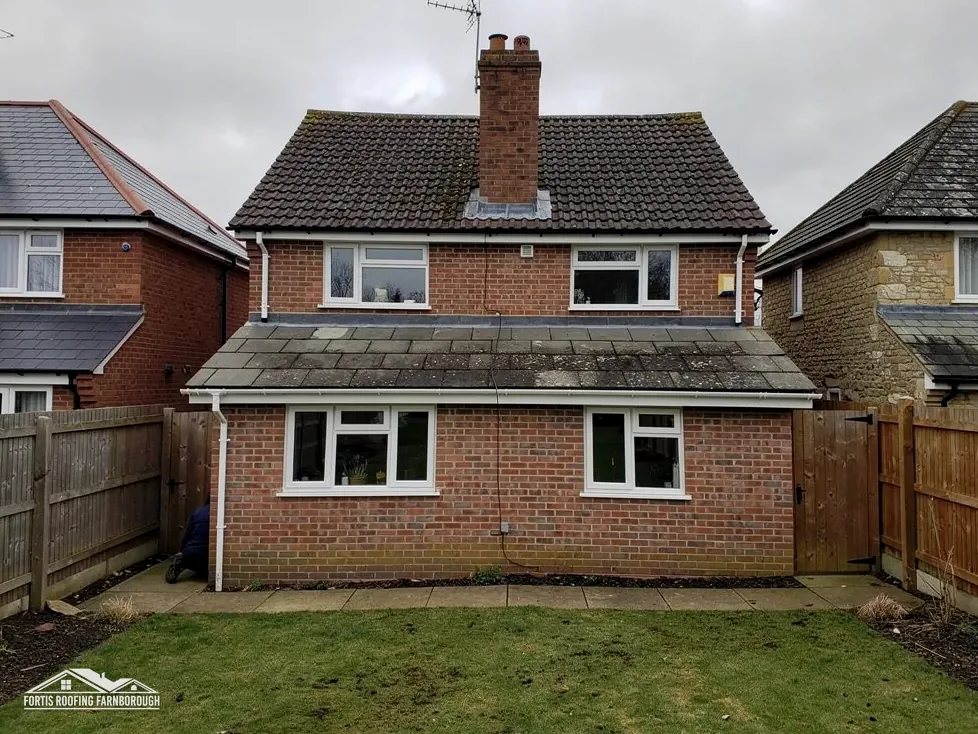
The appraisal lists red and orange brick and clay tiles, also used for tile-hanging, among Bentley's local materials.
Many timber-framed houses hide behind later brick or stone re-facing, so frames are older than they look.
Map of Bentley with Binsted, Rowledge, Wrecclesham, Crondall marked around it.
Map data © OpenStreetMap contributors. Loads only when you ask for it.
Bentley lies on the A31 between Farnham and Alton, on the Surrey border and north of the River Wey, with Farnborough 12.5 road miles to the north-east.
About 12.5 road miles south-west of Farnborough · East Hampshire District Council and Hampshire County Council.
Bentley, appraisal and consent
How East Hampshire District Council and Hampshire County Council share a Bentley roof job, what the conservation area appraisal records about tiles and frames, and which listings and dates matter.

| No. | Chapter | The figure it turns on |
|---|---|---|
| 01 | East Hampshire plans, Hampshire licenses | 10 clear working days for scaffold |
| 02 | What the appraisal says about Bentley's tiles | Handmade tile roofs, characteristic undulation |
| 03 | Bentley's conservation area and Cedar Cottage | Designated 1968, extended 1978 and 1993 |
Chapter 01 of 03
Bentley's roof-job rules in four published figures
Bentley is in East Hampshire, and East Hampshire District Council handles planning for the village. The council also runs its own building control team, with no shared partnership named on its pages, and it notes that a registered building control approver can be used privately. Hampshire County Council is the highway authority. The village is 12.5 road miles from Farnborough, measured from the A325, which puts Bentley comfortably inside the 30 miles we work to.
East Hampshire states no re-roofing percentage, so we apply the national guidance. Re-covering a small area of a roof normally falls under the limits of less than 25 per cent of the building envelope and less than 50 per cent of the roof. Larger works, or a covering that adds 15 per cent or more to the weight, call for approval and a structural check. Heavy tile on an old frame is exactly the case where that matters, so we look at the loft timbers, measure the existing covering and only then talk about options. A lighter covering is sometimes the better choice on a frame this old, and we say when it is.
Section 169 of the Highways Act 1980 requires a licence for scaffold standing on the public highway. In Bentley that licence comes from Hampshire County Council, and the scaffolding company, not the householder, submits the form. Hampshire County Council asks for ten clear working days before the intended start, charges £211.90 for the first 2 weeks and £72 for each further 2 weeks, and does not offer extensions: a longer job needs a new application. Scaffold on a private drive needs no licence.
The A31 carries through traffic, so a house on it may have only a narrow strip between its front wall and the road. We look hard at where scaffold could safely stand at the survey. On side roads with deeper front gardens the question is usually simpler. Either way we tell you the arrangement and the likely licence period before you book, so nothing about the access is a surprise on the day.
All of this is shared between you, us and the scaffolders, and we try to keep it simple: you decide on the work, we handle the arrangements around it, and the written price comes after the survey.
Chapter 02 of 03
| Feature | As the appraisal records it |
|---|---|
| Roofs | Steeply pitched handmade tile roofs singled out, with undulation |
| Local materials | Red or orange brick, clay roof tiles, malmstone, ironstone, a little flint |
| Tile-hanging | Clay roof tiles also used on walls |
| Frames | Many timber-framed houses hidden behind later re-facing |
| Earliest house | No. 1 Somerset Cottages, cruck-built hall dated 1311/12 |
East Hampshire's appraisal gives a clear record of what Bentley is built from. It singles out steeply pitched handmade tile roofs, with the undulation that handmade tiles give a roof, and its list of local materials includes red or orange brick, clay roof tiles that are also used for tile-hanging, malmstone, ironstone and a little flint. Natural slate is named among Bentley's roofing materials as well. Many of the timber-framed houses are hidden behind later brick or stone re-facing.
The appraisal was written for a review of the conservation area, which was first designated in 1968. It is the council's own record of the village, and so the best guide we have to what East Hampshire expects to see on a repair.
No. 1 Somerset Cottages is a cruck-built, timber-framed hall dated to 1311/12, described as the earliest domestic cruck building yet identified in Hampshire. It is now faced in red brick, with a tiled roof and tile-hung gables. That one house shows what the appraisal means about hidden frames: a 14th-century structure under a roof that looks like any other village roof from the road.
The undulation that makes a handmade tile roof attractive also makes it awkward to repair. Tiles of the same size from a different maker rarely sit the same way, so a patch can look wrong from the lane and let water in at the lap. We source tile by looking at the existing ones: size, thickness, camber, colour and the way they have weathered. Where a good match exists, we use it, and where one does not, we tell you before any price is given.
Reclaimed tile is often the best answer for a small repair, because it already carries the weathering. A larger repair or a full re-roof may need new tile chosen to blend with the old. In either case we photograph the existing roof before starting and again when finished, so the repair can be judged against the original.
A village's oldest frame
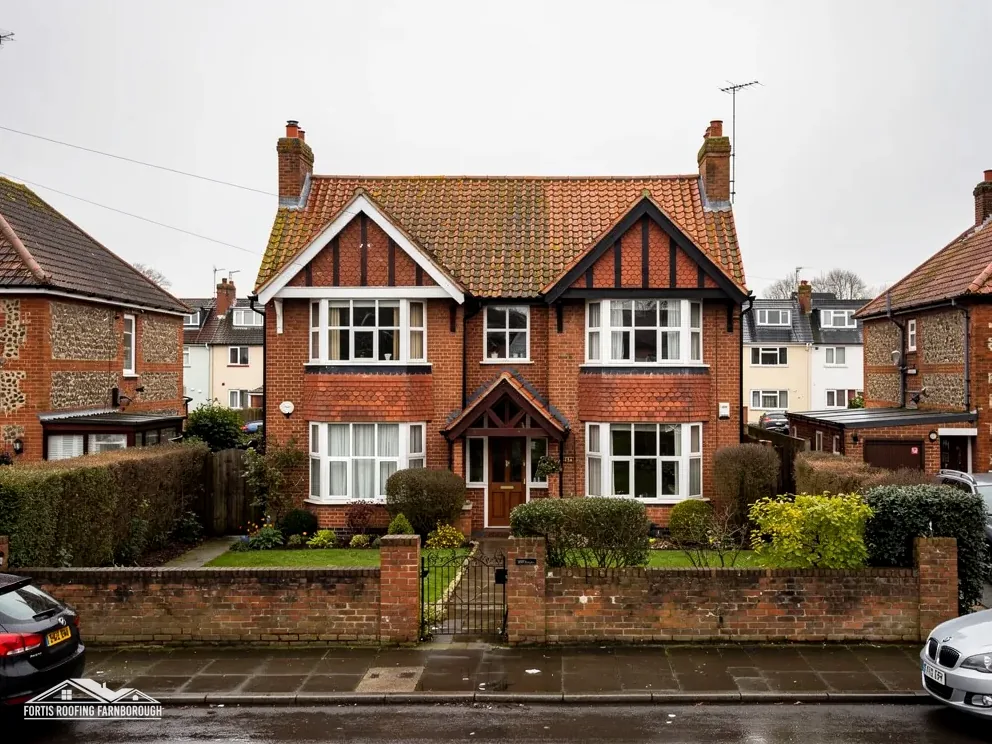
Brick walls, tile-hung gables and tiled roofs belong together here, and a repair that changes one tends to show against the others. That is why we look at the whole elevation before we price a section of roof, not just the slope in front of us.
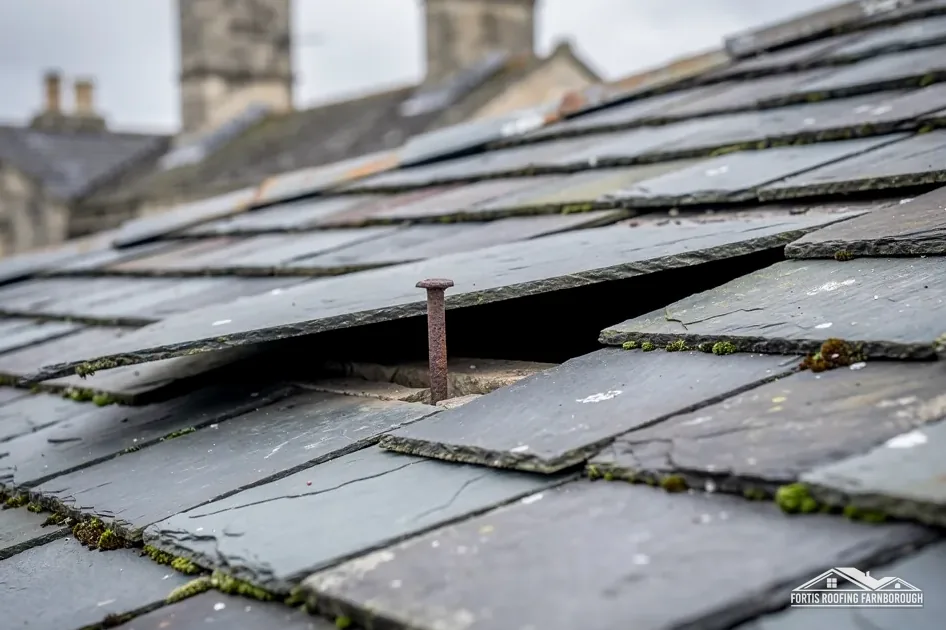
A roof like this also tells you where to look for trouble. Valleys, hips and the junctions with tile-hung walls take the most water. Our pitched roofing page sets out how those details are repaired, and the slate roofing page covers the slate roofs the appraisal also names.
Chapter 03 of 03
Bentley's designation record
The Bentley conservation area was designated in 1968 and extended in January 1978 and again in June 1993. It lies within about 0.75 km of the village centre. Repair is allowed inside a conservation area, but matching matters more there. If the look of a roof is going to change, with a different covering, a new ridge detail or a rebuilt stack, East Hampshire's planning team should hear first, before any work is priced.
For a house in or near the conservation area, check whether an Article 4 direction applies with East Hampshire District Council. We put that question to the council for your address before we price anything that changes the roof's appearance, and the answer goes into the survey report. Directions differ from place to place, and only the council can say whether one reaches a particular house.
Cedar Cottage is listed Grade II, as are Fox Hall with Fox Hall Cottage and Ganwells. Work that affects the character of a listed building needs listed building consent from East Hampshire District Council in addition to any other approval. Listing does not remove permitted development rights, but the consent is still required, and the safest course is to speak to the conservation officer first.
The practical evidence a council wants is simple: what is on the roof now, what is proposed and why. Our survey provides the first, with close photographs of tile, ridge, verge and eaves, and our written report states the second. That makes the conversation shorter, and it gives you a record you can keep with the house.
Ask early if you are thinking of selling. A buyer's surveyor looking at a house in a conservation area may ask for evidence of what was done to the roof and when, and a dated photographic record answers that question without a search through old paperwork.
For unlisted homes outside the conservation area, the same habits still pay. A repair that follows the original tile and detail protects the look of the lane, and it helps when the house is sold. Our chimney repairs page covers stacks, which on a village roof are often the most visible feature.
You can, but a modern tile rarely sits like a handmade one, and the join shows from the lane. In a conservation area that also matters for consent. We look for reclaimed or closely matched tile first, show you samples against photographs of your roof, and tell you plainly where a match is not available.
A like-for-like repair is normal upkeep. If the look of the roof will change, through a new covering or a rebuilt stack, that is the moment to speak to East Hampshire's planning team. We also check with the council whether an Article 4 direction applies to your address before any price.
Hampshire County Council issues it, and the scaffolding firm lodges the form for the customer, with ten clear working days before the start. We work out at the survey whether scaffold can stand on the frontage safely or must sit on private land, then agree the plan with the scaffolder.
Where work would affect the character of a listed building, listed building consent from East Hampshire District Council is needed. A true like-for-like repair may not alter character, but that is the council's judgement, not ours or yours. Photographs of the roof as it stands give the council what it needs to answer quickly.
Get your free roof quote
Give us your Bentley road and the fault you suspect, and we will set a date for the survey.
10-year workmanship guarantee, in writing.