The short answer
Conservation areas do not remove the Class C rights that cover most roof windows on houses, although they do bar dormers. A local Article 4 direction can still withdraw rights at your address, and Hart's direction reaches frontage roof slopes. Ask the planning team to confirm the position before you order a window.
What Class C leaves alone
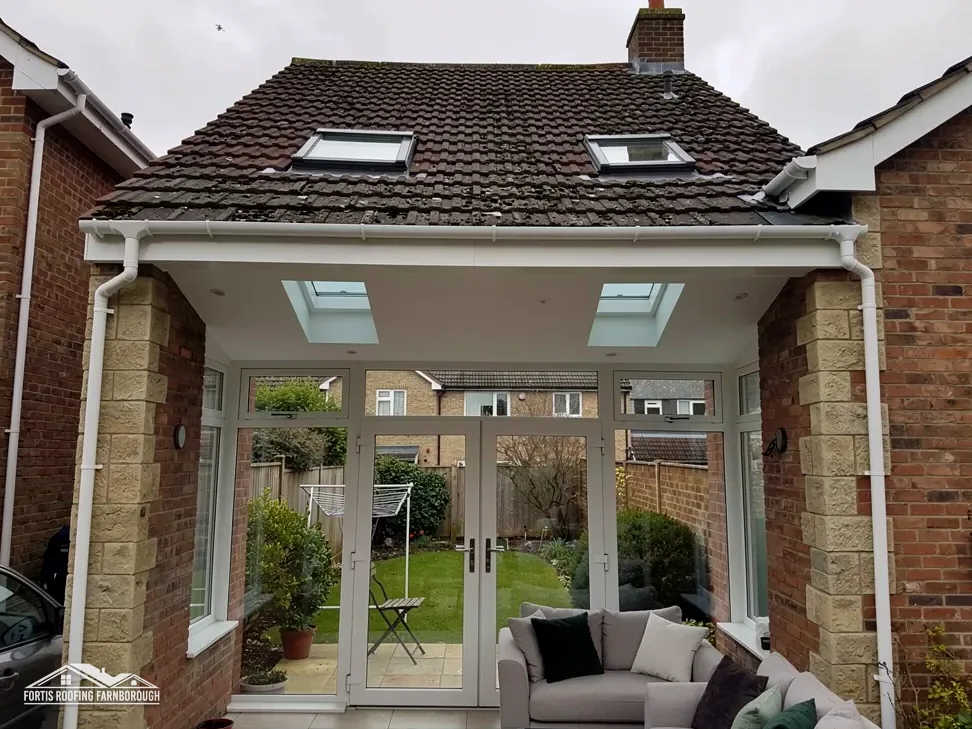
Permitted development means planning permission granted by national rules, so no application is needed. On a house, a roof window normally comes under Class C of Part 1 of Schedule 2 to the General Permitted Development Order 2015, the class for roof alterations. Its main limit is projection: the window must not stand more than 0.15 metres out from the original slope.
Many owners assume a conservation area switches those rights off. For Class C, it does not. Article 2(3) land, a category taking in conservation areas, National Parks and areas of outstanding natural beauty, is excluded from some classes but not from this one. A flush window on a house roof can therefore be permitted in a conservation area.
Dormers go the other way. Class B refuses to apply on article 2(3) land, so building a dormer in a conservation area, in a National Landscape such as the Surrey Hills or the North Wessex Downs, or in the South Downs National Park needs a full planning application.
One condition runs through every case: the glazing of a window on a side elevation must be obscured. Our answer on roof windows on a side roof slope explains how that works.
Where an Article 4 direction changes things
A council that wants tighter control can issue an Article 4 direction. GOV.UK describes it as the mechanism by which specified permitted development rights are withdrawn across a defined area. Class C can therefore exist nationally and still be absent at your address.
Only some directions are known to touch roofs. Rushmoor's roof-relevant ones are narrow: chimneys and flues under the Cargate direction in Aldershot, and rooftop antennas facing a highway under the Wellesley direction. Neither addresses windows. Hart is broader. Its 1998 directions, attached to most of its conservation areas, take in alterations to a house frontage, expressly naming works that touch a front-facing roof slope.
Basingstoke and Deane applies directions to four of its central areas, and in those, changing a roof needs permission. Guildford uses its directions to control chimneys.
For all the other councils in our patch, the correct step is to ask whether a direction applies. We do not guess at the content of one we have not read.
Rushmoor lists nine conservation areas, and several of them are named after parts of Farnborough, including South Farnborough and Farnborough Hill, so a Farnborough address may well sit inside one.
Front slopes and the look of the street
Which slope carries the window makes the biggest difference. A rear slope seen by nobody from the road seldom raises a question. The front slope faces the public, and that is the one a conservation officer cares about and the one Hart's frontage wording covers.
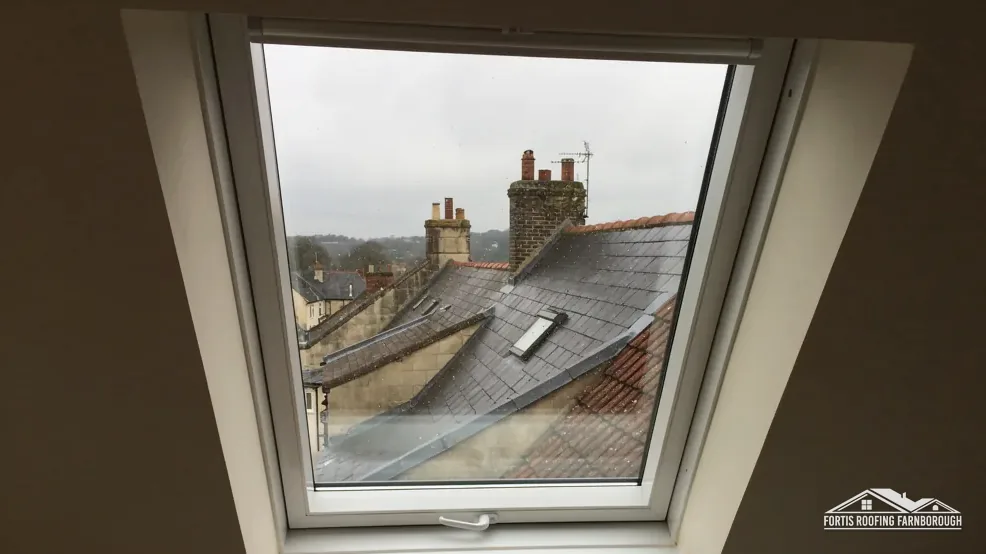
Design counts on any slope that can be seen. A conservation-style roof window lies flush with the covering, has a slim frame and often a central glazing bar, so it reads as part of the roof. Basingstoke's guidance for those areas wants original slate and clay kept, and treats concrete and artificial substitutes as unlikely to find favour, so the covering round the window matters too.
Position and number are noticed. Windows that line up with openings below, sit evenly and stay modest in size blend into the street. A group of large units across a front roof draws the eye.
Planning rules are only part of the picture. A flat has no permitted development rights at all, so anything beyond a straight like-for-like swap needs an application. Listed buildings add listed building consent, which our answer on roof windows on a listed building covers.
How to check before you order
Begin with the council's map. Most publish conservation areas and any directions online, and a call to the planning team settles a given postcode. Three questions are enough: is the address inside a conservation area, is a direction in force, and does it mention roof slopes or rooflines?
Next, ask whether the window you have in mind is permitted development or needs an application. If you want written confirmation, which is handy when you sell, you can ask about a lawful development certificate. The planning team can explain how.
Trees may enter the story. In a Rushmoor conservation area, notice of six weeks is needed before work on a tree with a stem of 75 millimetres or more at 1.5 metres, relevant if scaffold has to go close to one.
We survey the roof, photograph each slope and note which ones face the road. We tell you what we expect the planning position to be and mark the points to check with the council, because planning decisions belong to the council and not to us.
Building control is a separate matter, covered in our answer on roof windows and Building Regulations. For the wider service, see roof windows and skylights.