The short answer
Sections are opened one at a time, and each is made weathertight with temporary sheeting before the crew leaves or rain arrives. Work stops in heavy rain, and a forecast is checked before a slope is stripped. A showery spell can add days to a job, but the house is not left open to the weather. Material and timber damage is the risk, so planning is the protection.
Opening the roof in sections
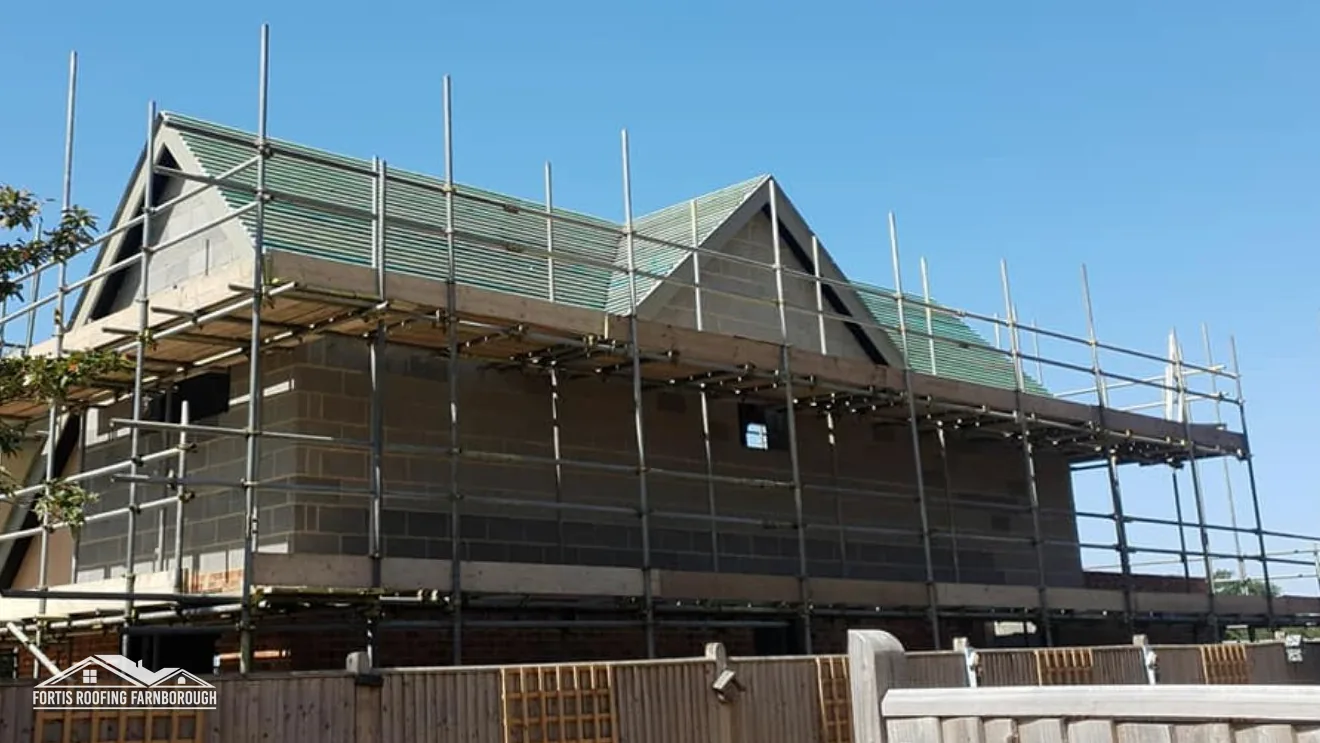
A re-roof is not done in one sweep. The old covering comes off a slope or a section at a time, and the new underlay and battens go on before the next area is opened. That keeps the amount of roof exposed to a minimum.
Section size follows the weather and the crew: larger on a settled day, smaller when the forecast is uncertain, so the work can be closed up in good time.
The new underlay is itself a first line of defence. Once it is on, with the battens fixed, a slope is shedding water much as it would under the finished covering, until the tiles are laid. The order of work therefore matters: strip, underlay, battens, tiles.
Planning starts before the strip-out: the forecast is checked, the most exposed slope is tackled in the best conditions and materials are on site so the crew is not left waiting.
Our page on replacing roofing felt explains what the underlay does and why it matters while the tiles are off.
If you live in a bungalow or a low house, the same method applies, with shorter slopes and quicker closing up.
Sheeting, tarpaulins and temporary covers
Where part of a roof must be left open overnight or through a shower, it is covered. The usual tools are heavy-duty tarpaulins or purpose-made temporary roof sheeting, fixed to battens or the scaffold so that wind cannot lift them, and lapped so that water runs off without getting under.
A cover is only as good as its fixing. A loose sheet flaps, tears and lets water in, so it is secured along its edges and weighted or battened down. A cover is also checked after strong wind.
It is meant to be temporary. A sheet over bare rafters is not the same as a finished roof, and heavy rain over several days can find a way in. So the aim is to keep the exposed area small and the time short.
Inside the house, nothing is assumed. Furniture and belongings in rooms under an open slope may be covered, and the loft is cleared of anything that could be damaged. Our page on clearing the loft before a roof replacement explains how to prepare.
Timber is the other thing to protect: rafters left in repeated rain take on water, so they are covered, and any that get wet are given time to dry before being closed in.
When work stops, and the local weather
Heavy or sustained rain stops roofing work. It is unsafe on wet slopes, it makes laying underlay and fixing battens poor, and it risks soaking the structure. High wind stops it too, since tiles and sheets become dangerous to handle.
When rain comes, the crew closes up what is open, checks the covers and leaves the roof safe. Work resumes when the surface is dry enough to be safe and the forecast allows.
Met Office averages for South Farnborough (1991 to 2020) include about 118 wet days a year, and around 53 air-frost days. That is a lot of days when a roofer may need to wait or move more slowly. That is part of why no roof replacement runs to a fixed number of days, and why the plan carries a weather allowance.
Settled weather makes scheduling easier, though winter work is not ruled out; it just means closer attention to the forecast and smaller sections. A quote does not change because it rained.
If a sale or event date matters, tell us early so the plan can aim to have the roof closed in before it.
Frost matters for mortar, so dry-fix parts may be chosen for the ridge in cold weather.
What you can expect
You will be told each day what is planned and whether the weather changes it. If an area is covered and left, you hear about it. If a delay is likely, you hear that too.
If water gets in, tell us at once. Photograph the damage, protect belongings and keep the records. Report it to your insurer as well, who will want to know. The first job is always to stop the water and make the area safe, then to see what has been affected.
A leak during a re-roof is a matter for the contractor to put right. Before the job, ask any roofer how they protect an open roof overnight, what they do when rain is forecast and who is responsible if water gets in. A clear, specific answer is a good sign.
We survey first, photographing the roof and the loft so that the condition before work is recorded. That record helps in the rare case of a dispute.
Our quote is a single total that the weather does not alter. The roof replacement hub covers the whole job for homes near Farnborough and Fleet.