The short answer
Eaves felt is the strip of underlay at the foot of the roof that guides water from beneath the first tiles into the gutter. When it rots, rain and condensation run behind the gutter and into the fascia, soffit and rafter ends. Signs are a damp or flaking fascia, stained soffits and green growth. The fix is a new strip or tray, and sometimes more underlay.
What eaves felt is for
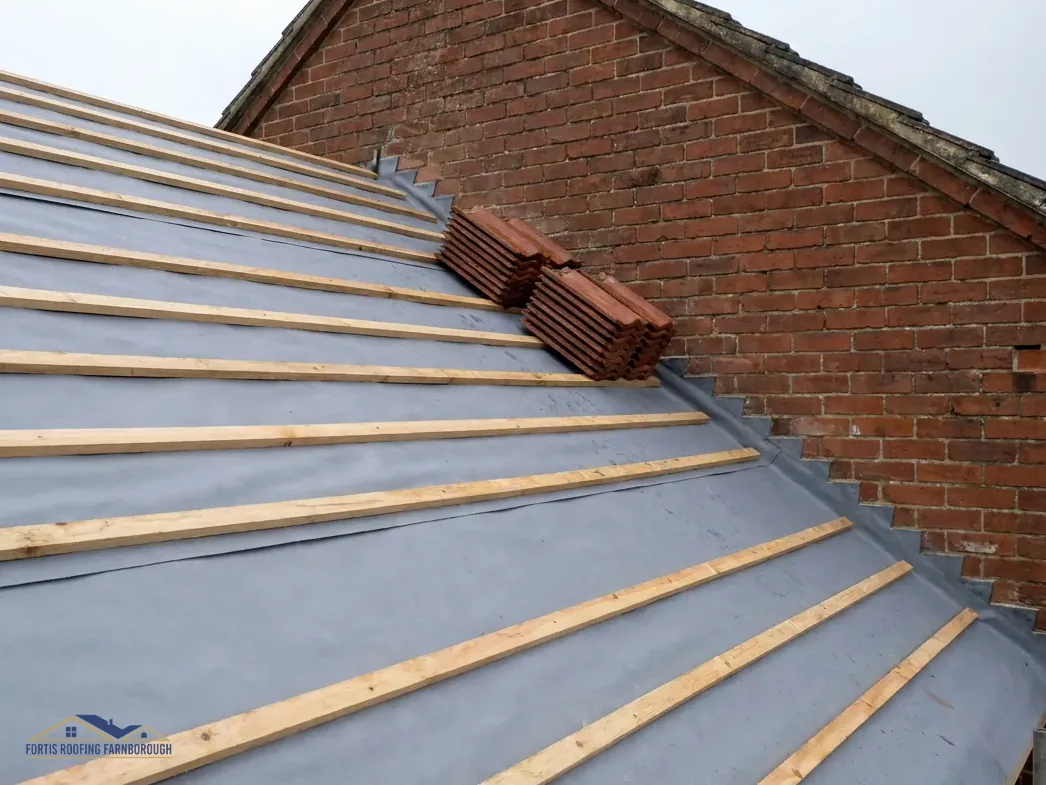
Beneath the tiles of a pitched roof lies underlay, which catches whatever water gets past the tiles and sends it down the slope. At the foot of the slope it has one more job, to deliver that water across the fascia edge and into the gutter, not behind it.
That final stretch is the eaves felt, a strip of underlay or a purpose-made tray laid over the fascia edge and dressed down into the gutter. If it is missing, short, torn or perished, water slips off the underlay and wets the top of the fascia and the rafter feet. It is out of sight from the ground, so nobody notices until timber starts to rot.
Older roofs often have felt that was cut short, or that has dried, split and curled with age. Some roofs have no eaves strip at all, and rely on the tiles overhanging the gutter by a good margin.
The underlay itself is part of the roof's moisture management. An HR underlay is non-breathable, and the eaves need ventilation of 25mm along their length for pitches of 15 degrees or less and 10mm above that, according to Marley's guidance on cold roofs. Our page on whether a loft needs ventilation covers how that works.
Signs of failure
Most signs show outdoors, along the eaves line.
- A fascia board that is damp, stained, peeling or soft to the touch, especially along its upper edge.
- Soffits that are stained, blistered or discoloured, with water marks running down from the tile line.
- Green algae or moss on the fascia, which thrives on persistent damp.
- Water running down the back of the gutter, or behind it, on a wet day, instead of falling into it.
- Gaps or sagging in the felt, if you can see the edge from a ladder or a camera.
- Damp air in the roof space near the eaves, and dark patches on the rafter ends.
Inside the house, water at the eaves can reach the top of an external wall, and a damp patch in the corner of a bedroom ceiling next to an outside wall may trace back to it.
Do not mistake the problem for a blocked gutter alone. A gutter that overflows in rain is one fault. Eaves felt that lets water behind the gutter is another, and both can be present.
Photograph the fascia and soffit on a dry day and again after rain. That helps us tell which fault is which.
Eaves protection and the repair
The usual repair is a new eaves strip. The lowest courses of tiles come up, the old felt is cut away and a new strip or tray goes over the fascia edge and down into the gutter, with the underlay lapped over it. The tiles are then re-laid. A purpose-made eaves protection tray gives a firmer, more reliable edge than a piece of felt.
It is a modest job on a single elevation, and it prevents the damage that follows if left. Rot at the rafter feet and the fascia is far more expensive to put right than the strip that would have stopped it.
If the fascia or the rafter ends are already rotten, they are repaired or replaced before the new strip goes on. Fitting a new strip over rotten timber hides the problem.
The same visit lets the gutter fall and fixings be checked. Our page on stopping birds nesting under roof tiles covers eaves combs, which must pass air as well as stopping birds.
We lift only as many tiles as the job needs, and put every sound tile back.
The eaves is also where gutter, fascia and soffit work meets roofing, so it helps to have it all looked at together.
When the whole underlay needs replacing
Sometimes the problem is not confined to the edge. If the eaves felt has perished, the rest of the underlay on that slope may be the same age and in similar condition. A roof with tired underlay across its whole area will leak in more places than the eaves, and patching the bottom row will not help.
Signs that a larger job is needed include torn or brittle underlay visible from the loft, daylight through the roof, damp battens and rotten rafter ends in several places. Stripping and re-covering the slope with new underlay, and new battens where needed, is then the sound answer, as our page on condensation in the loft would also suggest where moisture is a theme.
When the roof is being stripped anyway, it is the right time to choose the underlay type. A breathable membrane changes the ventilation arrangements, so it is a decision made with the whole roof in mind.
The survey covers the eaves from the ladder and the roof space, with photographs showing whether the fault is local or general. Our quote is a single written sum.
Wider tile and underlay work is covered on the pitched roofing hub.