The short answer
In roofing, a guarantee usually comes from the contractor and covers the work done, while a warranty usually comes from the manufacturer and covers the product. Neither is a lifespan. Your statutory rights under the Consumer Rights Act 2015 apply regardless, and any promise you rely on should be in writing, saying who stands behind it and what it excludes.
Who gives which promise
A guarantee on a roof job is normally the roofer's own promise about the labour and quality of the work. If a ridge tile comes loose because it was badly fixed, or a flashing lets in water because it was badly dressed, the roofer comes back and puts it right. It runs for a stated period, and the paper should say how long.
A warranty usually belongs to the product. Tile makers, membrane makers and roof window makers publish terms covering defects in what they sell, such as a tile that crumbles or a membrane that splits for reasons of manufacture. The maker, not the roofer, is the one standing behind it, and the terms usually depend on the product being installed to the maker's instructions.
Some contractor guarantees are backed by an insurance policy, so that the cover continues if the firm stops trading, and some depend only on the firm. The difference is worth asking about. A promise from a business that has closed is hard to claim on.
Neither document is a substitute for good work in the first place. They matter when something has gone wrong, and the quality of the paper is what decides whether the fix is simple.
A warranty is not a lifespan
It is easy to read a long warranty as a prediction. A product with a 30-year warranty must last 30 years, the thinking goes. The two are different things.
A warranty is a legal promise with conditions, exclusions and a claim process. A lifespan is how long a material is expected to serve in normal use. Marley makes the point itself: its figure for roof tiles is around 60 years, and it adds that the number carries no promise of longevity.
The published lifespan ranges show how wide the gap can be. HomeBuilding (Sep 2025) gives plain concrete tiles "40-50 years" and Welsh slate "100+ years", and neither figure is a promise. A roof can outlive its warranty by decades, or fail well inside it if it is poorly installed or neglected.
Warranties also tend to exclude the things that actually fail roofs: bad fixing, blocked gutters, impact damage and lack of maintenance. Read what is excluded before treating a warranty as a safety net. Our answer on how long a roof lasts sets out the ranges and the sources.
What the law gives you without any paper
You do not depend on a guarantee for your basic protection. Section 49 of the Consumer Rights Act 2015 sets the standard for any service: the trader must show reasonable care and skill. Beyond that, section 52 sets a reasonable time for the work where none was agreed. Section 57 says that liability under these provisions cannot be excluded.
If a service falls short, section 54 gives remedies, including repeat performance and a price reduction. A guarantee adds to these rights and does not replace them. Beware of any document that suggests you give up your legal rights by accepting its terms.
The practical gap is time and proof. The statutory route can mean arguing about whether the work met the standard, while a clear written guarantee tells you what happens and by when. That is why a written promise is worth having, even though the law already protects you.
If you need to pursue a problem, the Citizens Advice consumer helpline is 0808 223 1133, and our page on how to complain about a roofer sets out the steps.
Where a dispute stays unresolved, section 308 in the Digital Markets, Competition and Consumers Act 2024 obliges the trader to name any dispute resolution scheme you could turn to.
NHBC Buildmark, and what to ask for
New-build homes often have NHBC Buildmark cover, which works differently from a roofer's promise. NHBC describes two years of builder warranty and NHBC guarantee after completion, followed by eight years of insurance that responds to defects in listed parts of the house. It is therefore not a ten-year promise from the builder. In years one and two the builder is the first port of call, and from year three the insurance cover applies to the parts it lists.
If your roof is on a new build and a problem appears, check which period you are in before you call anyone.
For any roof job, ask for the following in writing:
- who gives the promise, and what happens if they stop trading;
- what is covered, for how long, and what is excluded;
- whether it passes to a buyer if you sell the house;
- what you must do to keep it valid, such as maintenance.
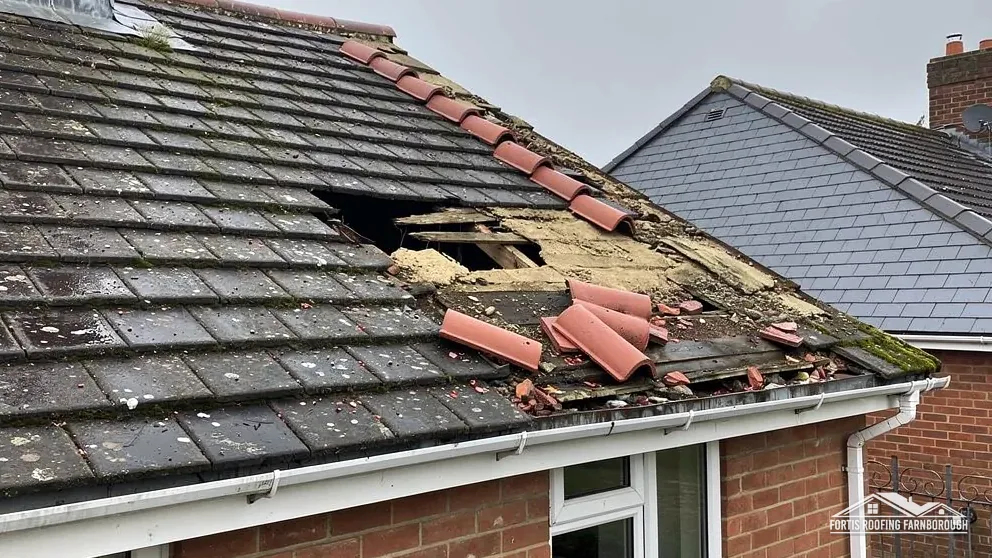
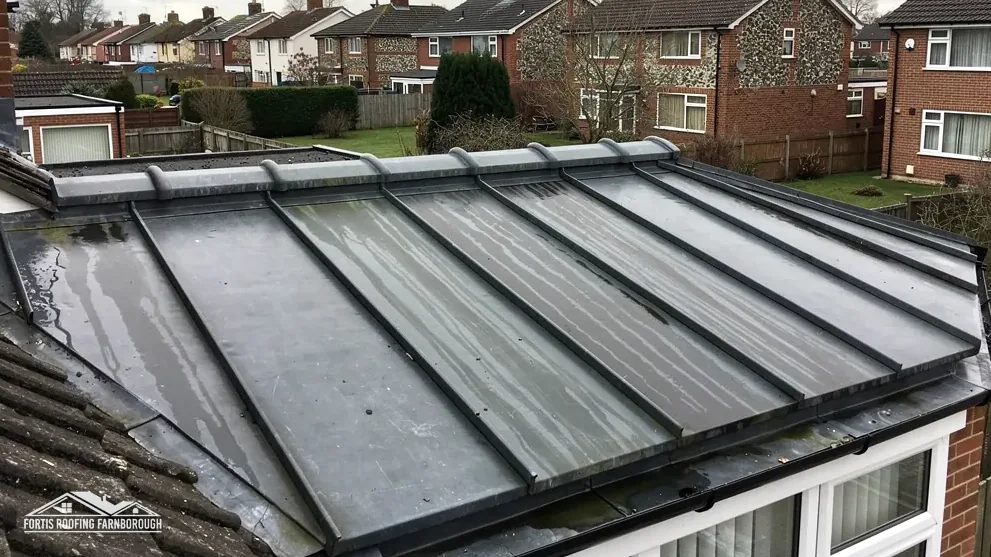
Our own terms are shown on every page by the site, and our survey photos show what the roof looks like and what the work involves. The services we offer are listed from the homepage.