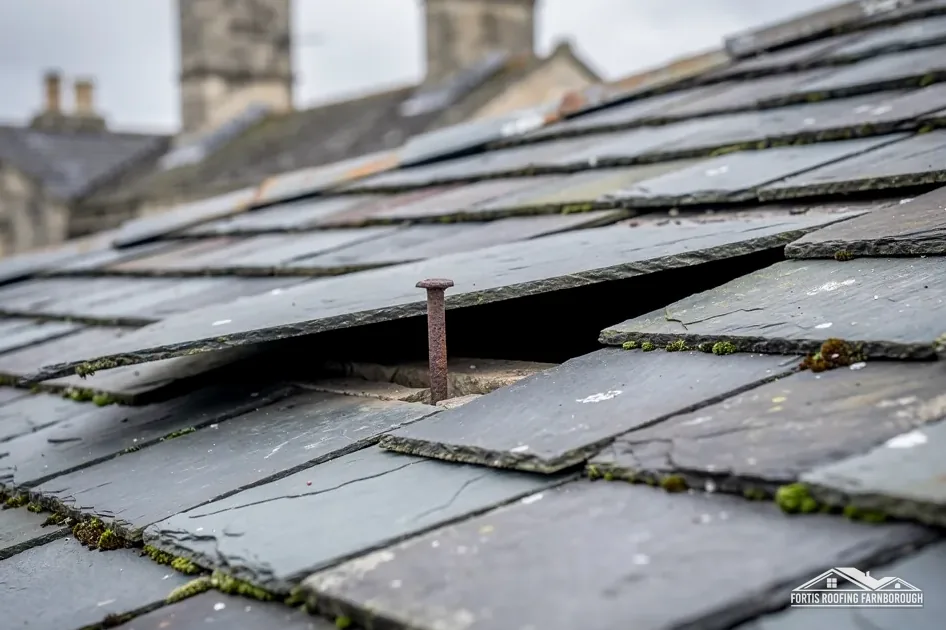
Houses rebuilt from 1860
John Walter built the Bear Wood mansion from 1860 and rebuilt most of the village of Sindlesham around it.
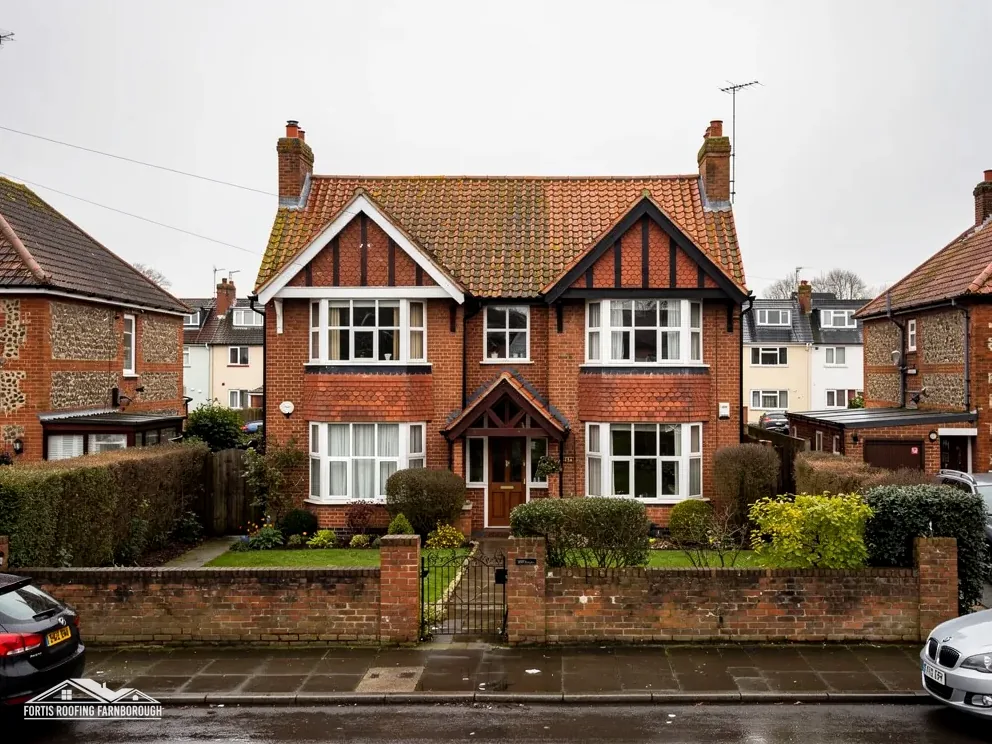
Roofs in the estate village the Walters rebuilt from 1860
Sindlesham is a small village south of the M4, rebuilt by the family behind The Times. We survey its roofs for what the years have done to them.
John Walter built the Bear Wood mansion from 1860 and rebuilt most of the village of Sindlesham around it.
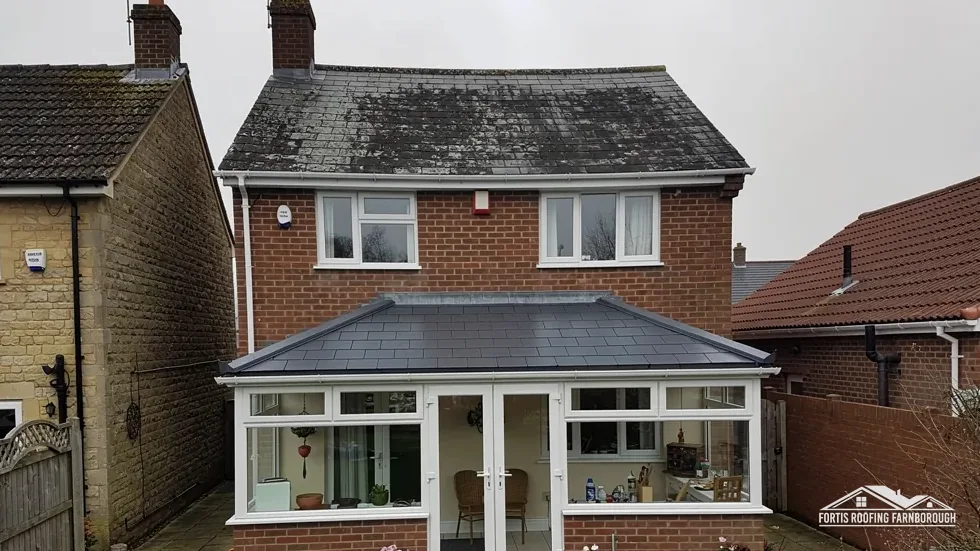
Bearwood County Primary School and the Main Lodge to Bearwood are both listed Grade II.
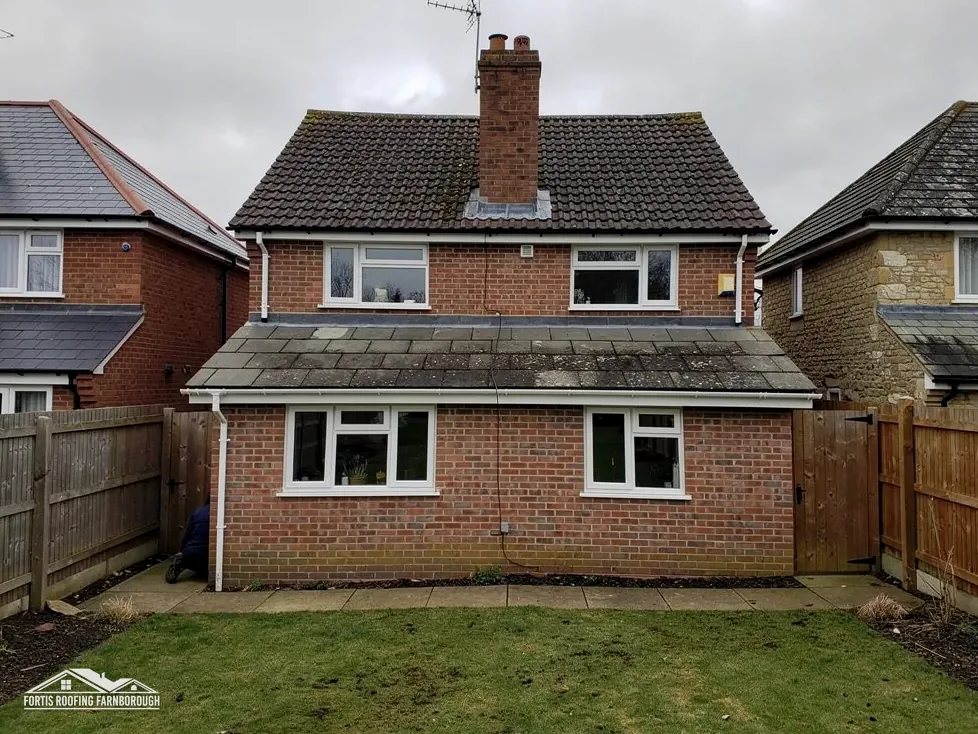
A Baptist chapel was built in 1881, and St Catherine's Church was built by the Walter family.
Map of Sindlesham with Winnersh, Barkham, Lower Earley, Arborfield marked around it.
Map data © OpenStreetMap contributors. Loads only when you ask for it.
Sindlesham is the rural southern part of Winnersh parish, near the River Loddon and the Bearwood estate, with Farnborough 13 road miles to the south-east.
About 13 road miles north-west of Farnborough · Wokingham Borough Council (unitary).
Sindlesham, estate and paperwork
How Wokingham's rules, Building Control Solutions and a scaffold licence line up for a Sindlesham roof, what the Walter family built here, and where Wokingham's conservation area and Article 4 list come in.

| No. | Chapter | The figure it turns on |
|---|---|---|
| 01 | Wokingham's rules before the ladder goes up | Footway at least 1.2 metres wide |
| 02 | John Walter's rebuilt village | Rebuilt from 1860 around Bear Wood |
| 03 | Conservation area, Mill Lane direction, three listings | Wokingham lists a Sindlesham conservation area |
Chapter 01 of 03
What Wokingham says about scaffold on a road, in four published figures
For planning, the highways and the scaffold licence, Sindlesham answers to Wokingham Borough Council alone. Building control is another matter, since the inspectors are Building Control Solutions, a joint venture of Wokingham and its neighbour West Berkshire Council. The village is 13 road miles from the A325 in Farnborough, a distance we measure the same way for every town we serve.
On Wokingham Borough Council's page the licence form is the scaffolding firm's job, filed for its customer, so your desk stays clear. The council wants a gap of no less than 10 working days before the proposed start and charges £263 for the first 4 weeks, then £163 for every 4 weeks beyond. Private roads fall outside the scheme. The footway must keep a clear width of at least 1.2 metres beside the scaffold, which is a design rule for the scaffolder and a planning input for us.
That 1.2 metres is worth thinking about on a small village lane. Where the footway is narrow, scaffold may need to be built over it as a covered walkway, or placed on your own land. The survey measures the footway and the lane, and from that you learn which arrangement is realistic.
Before any scaffold goes up, we confirm the road's status. Some village roads are adopted highway and others are private, and the licence rules differ. The answer can be found on the council's records or in your title deeds, and it can change the booking date by a fortnight or more.
No percentage appears on Wokingham's pages, which leaves the Planning Portal's guide in charge. Below 25 per cent of the building envelope and 50 per cent of the roof, no application is normally required, which is how the Planning Portal reads it. A covering 15 per cent or more heavier is a different matter, calling for approval and a check of the structure. Old village houses, built at different times, may carry timbers of very different sizes, which is why we examine the frame and not just the covering.
Questions from owners and contractors go to the Building Control Solutions team, or alternatively to a registered building control approver, the private channel. When a job sits close to the threshold, the query goes to your chosen body before any work is booked.
Chapter 02 of 03
| Record | What it says |
|---|---|
| 1860 | John Walter, third of the name, begins the Bear Wood mansion |
| Gardens | A huge lake laid out; most of the village rebuilt |
| 1881 | A Baptist chapel built at Sindlesham |
| Parish description | Rural southern part of Winnersh, south of the M4 |
| Drive | A near mile-long rhododendron drive, planted by the Walters |
From 1860 John Walter, the third of that name, built the large Bear Wood mansion, laid out gardens with a huge lake and rebuilt most of the village of Sindlesham. The county history of 1923 says so, and Winnersh Parish Council adds that the Walter family, founders of The Times, built the village, planted the near mile-long rhododendron drive and built St Catherine's Church. A Baptist chapel followed in 1881. Winnersh Parish Council also describes Sindlesham as the more rural southern part of the parish, south of the M4.
Two more buildings tell the same story: St Catherine's Church, which the Walters built, and the Baptist chapel of 1881, so the village has public buildings alongside its houses. Anyone responsible for one of those has a longer list of duties, but the roof lessons are the same: a clear record, a careful survey and a repair that matches.
A village rebuilt by one landowner within a few decades can share building details: similar eaves, similar chimneys, similar window and porch designs. We still do not assume what covers your house. What it does mean is that a repair which departs from the original pattern shows up against the neighbours.
The practical answer is the same as everywhere: look closely and record it. On each Sindlesham survey we note the covering and its condition slope by slope, the ridge and verge details, the chimney stacks, the eaves and the gutters. Where a house shares a wall with its neighbour, we photograph the junction and say what we can see of the other side, without going onto it.
Outbuildings count too. An older plot may hold a stable, coach house or workshop now used as a garage or studio. Their roofs are the ones owners forget, and we look at them if you ask, listing them separately in the report.
Dates in Walter's story
Estate-built houses of the 19th century have often been repaired in stages. A slope renewed in one decade sits beside one that is a hundred years older, and the line between them is a frequent leak. We look for that line and mark it on the photographs. Our slate roofing page describes how slate roofs are repaired when slipped slates are the cause.
A parkland and rhododendron history suggests plenty of trees about the village. Autumn leaf-fall fills valleys and gutters, and once a valley blocks, water can be driven under the tiles. Clearing them is routine work, with before and after photographs in your report.
Chapter 03 of 03
Wokingham's designations touching Sindlesham
Wokingham Borough Council's list of conservation areas, which stands at 16, includes Sindlesham. The council's map settles whether your own address lies inside, and we consult it ahead of the survey. A conservation area does not forbid repair. Its expectation is that work honours the recorded character, so new tile, ridge and chimney work follows what is already in place.
The council's own list of confirmed Article 4 directions includes one for Mill Lane, Sindlesham. For a house on or close to Mill Lane, check whether the direction applies to it with Wokingham Borough Council. We put that question to Wokingham's planners before any work altering the roof's appearance is priced. Directions are made for particular places and purposes, so a neighbour's experience is no guide; the council's answer for your own address is the one that counts, and we note it in the survey report.
Bearwood County Primary School, the Berkshire Masonic Centre and the Main Lodge to Bearwood are each listed Grade II. The school was listed on 29 April 1987. Wokingham Borough Council grants listed building consent where work would touch a listed building's character. Listing leaves permitted development rights standing, and consent is demanded in addition. Six listed buildings stand within 500 m of the village centre.
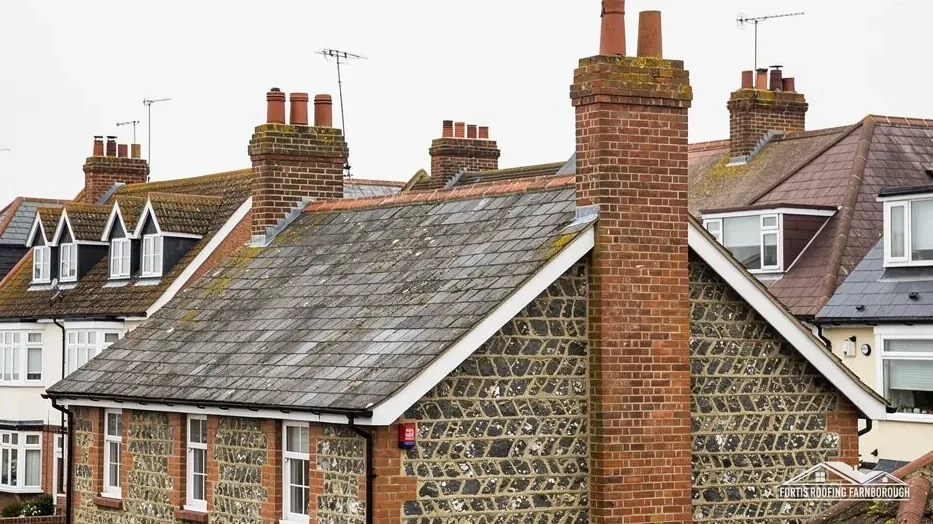
For owners of ordinary houses, the point to take away is simple. Check the three layers, in order: listing, conservation area, Article 4. Many Sindlesham roof jobs will meet none of them, and then the work is a plain matter of repair and sensible approvals. When one does apply, the survey gives you the evidence the council expects.
Owners tend to blur three separate questions into one. Is the house itself listed? Is it inside the conservation area? Does the Mill Lane direction apply to the address? Each has its own answer and its own office, and each can be answered before a ladder goes up. We ask them in that order at the start of every Sindlesham job.
Our chimney repairs page explains how stacks are repaired, work that is more likely to attract a council question in a conservation area than a slipped tile is.
At a shared wall the junction is photographed, and the report says what can be seen of the neighbouring slope from our side. Work on your side can reveal the state of the other, and if the neighbour's roof needs attention that is for the two of you to discuss. The photographs show you both the same thing.
If you live on or near Mill Lane, yes, because Wokingham lists a confirmed direction there. Wokingham Borough Council can say whether it reaches your house, so its planners are asked about your address before any change to the roof is priced. We record the answer in your report.
Wokingham charges £263 for the first 4 weeks and £163 for each further 4-week period, so an overrun is paid for. Wokingham Borough Council has the scaffolding company file for you, with at least 10 working days. We plan the duration from the survey, with slack for weather, and tell you before booking.
Not directly. The consent applies to the listed building alone and does not spread to the houses beside it. Your own unlisted house might still lie within Wokingham's Sindlesham conservation area, so any change to its appearance is worth raising with the council, and a repair that follows the old roof seldom prompts questions.
Get your free roof quote
Tell us the road in Sindlesham and the problem in a few words, and a survey slot will be offered.
10-year workmanship guarantee, in writing.