The short answer
HSE's advice for an older building, built or refurbished before 2000, is to treat asbestos as present until a survey says it is not, so a survey before roof work is the sensible course. MyJobQuote (Sep 2026) gives around £325 as a typical survey cost. The person responsible for the building, the duty holder, should know what the survey found before any roofer starts.
Why the survey comes before the roofer
Asbestos cannot be identified by eye. HSE points out that insulating board containing asbestos closely resembles board without it, and many cement sheets and linings are the same. A panel that looks like ordinary board or sheeting may be neither.
The rule that follows is plain: a building from before 2000, or refurbished before then, is taken to contain asbestos until a survey proves the opposite. A roof job is exactly the kind of work that disturbs materials, whether by drilling, cutting, lifting sheets or removing soffits, so the survey has to happen first.
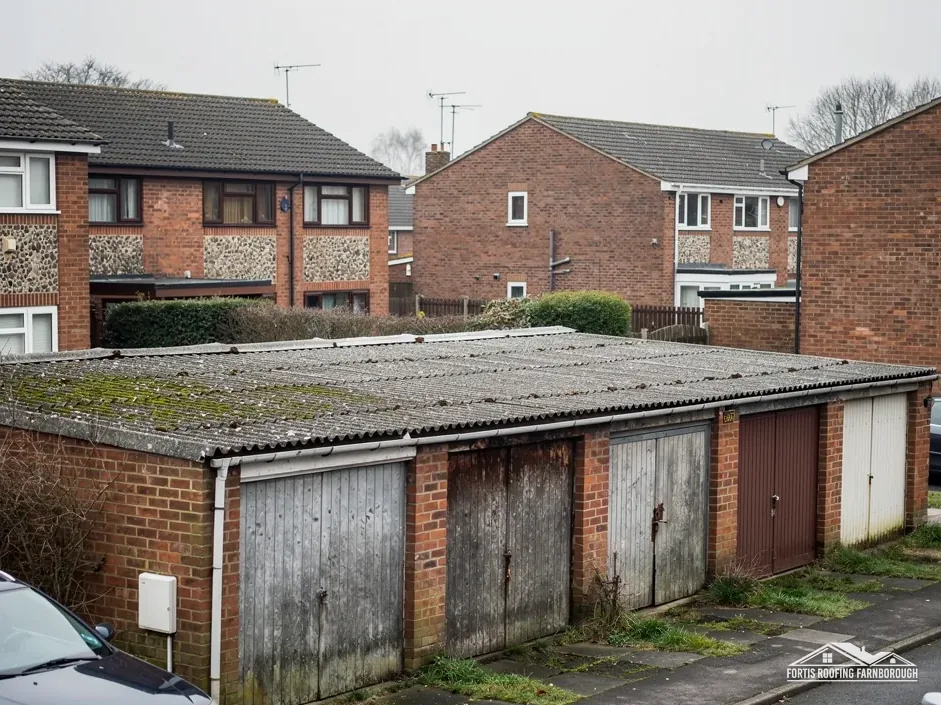
Roofs hold several likely materials. Corrugated asbestos cement sheeting turns up on older industrial buildings, and HSE describes such roofs as always fragile, which adds a fall risk to the health risk. External soffits can be asbestos insulating board. Gutters, downpipes and flue pipes can be asbestos cement too.
A roofer who has not seen a survey cannot know what is being handled, and neither can the owner. Starting without one risks exposure for the workers and for people in the building, and the cost of dealing with a contaminated site is far higher than the cost of a survey. Our guide to fragile roof safety covers the fall side.
What a survey involves and what it costs
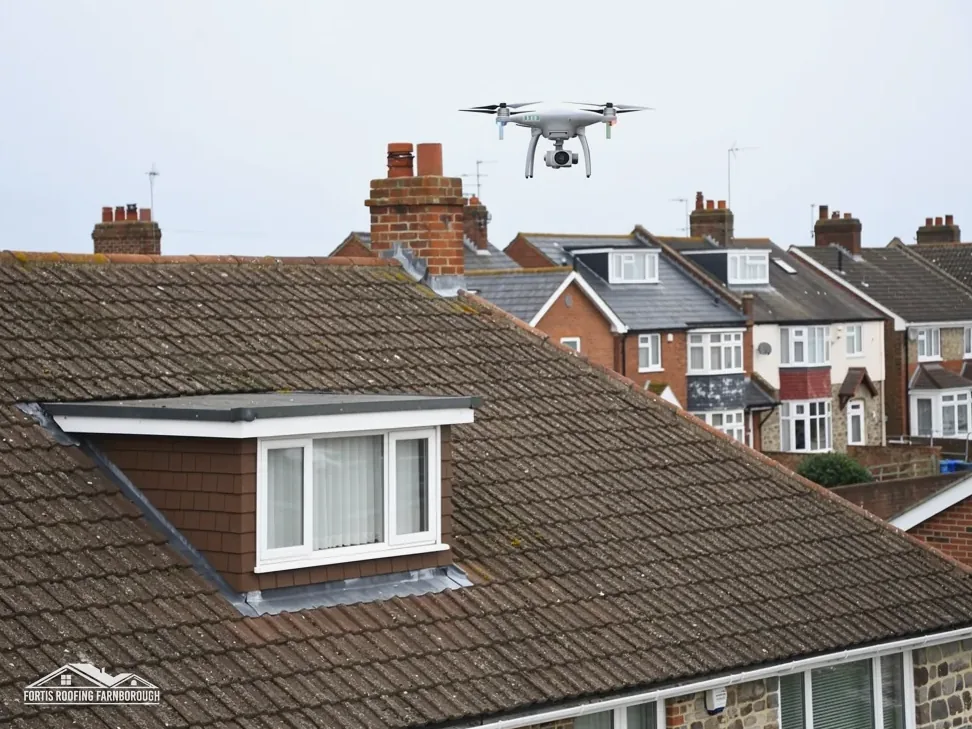
A survey for roof work looks at the parts of the building that the job will touch. A surveyor inspects the roof covering, rooflights, gutters, flashings, soffits and fascias, and the roof void underneath. Samples are taken from suspect materials and sent to a laboratory, and the results are set out in a report with locations and photographs.
The distinction in the trade is between a management survey, which locates materials during normal use, and a refurbishment or demolition survey, which is more intrusive and is needed before work that will disturb the structure. For a roof job that involves stripping or cutting, the more detailed kind may be required, and the surveyor can advise which fits.
MyJobQuote's page on asbestos in roofs, updated in September 2026, gives an asbestos survey as around £325. Treat it as a typical UK figure for a modest property. A large commercial building with many roof sections will cost more, because there is more to inspect and more samples to analyse.
The cost is small beside what it protects. A report that finds nothing lets the work proceed without delay, and a report that finds asbestos tells the roofer how to plan. Our answer on the cost of asbestos roof removal shows what follows when something is found.
Who is responsible for knowing
On a commercial or industrial building, a person has responsibility for the premises, often called the duty holder. That is usually the owner, the landlord or the managing agent, depending on the lease. HSE's guidance on commercial property sets out what that person must do about asbestos in the building.
Practically, the duty holder should have an asbestos register for the building, which records where materials are, what they are and what condition they are in. When a roofer is hired, the register, or a fresh survey, should be passed to the contractor before work begins. The contractor should confirm in writing that they have read it.
If a tenant orders the roof work and the landlord holds the register, the tenant should ask for it. If no register exists, a survey is the way to create one. Do not let work start on the assumption that someone else has checked.
Where a survey finds asbestos, the next step turns on the material and the planned work. Asbestos cement lifted with care counts as non-licensed work, while smashing it up is notifiable, and long-running work on insulating board is licensable. The survey and the rules settle each case.
What happens at our end
Our survey of a commercial roof starts with what is visible, and our opening questions cover the building's age and whether an asbestos register exists. If it does, we read it. If it does not, or if the building predates 2000, we ask for a survey before we quote for any work that would touch suspect materials.
We do not take samples, break sheets or drill into materials to find out what they are. Any of that releases fibres, and it belongs to a surveyor who is set up for it. Our job is to look, measure and photograph, and to tell you what we think the roof is made of and what we need to know before going further.
With the survey in hand, our written price covers everything and allows for the method the survey calls for. If asbestos is present, the scope covers how it will be dealt with and how the waste leaves the site.
Plan the survey early. A report takes time to arrange and to come back from the laboratory, and a project can lose weeks if it is left until the day before the crew is due. For industrial and commercial buildings more widely, see the commercial roofing hub.